





How Do You Safely Excavate Around Underground Gas Lines?
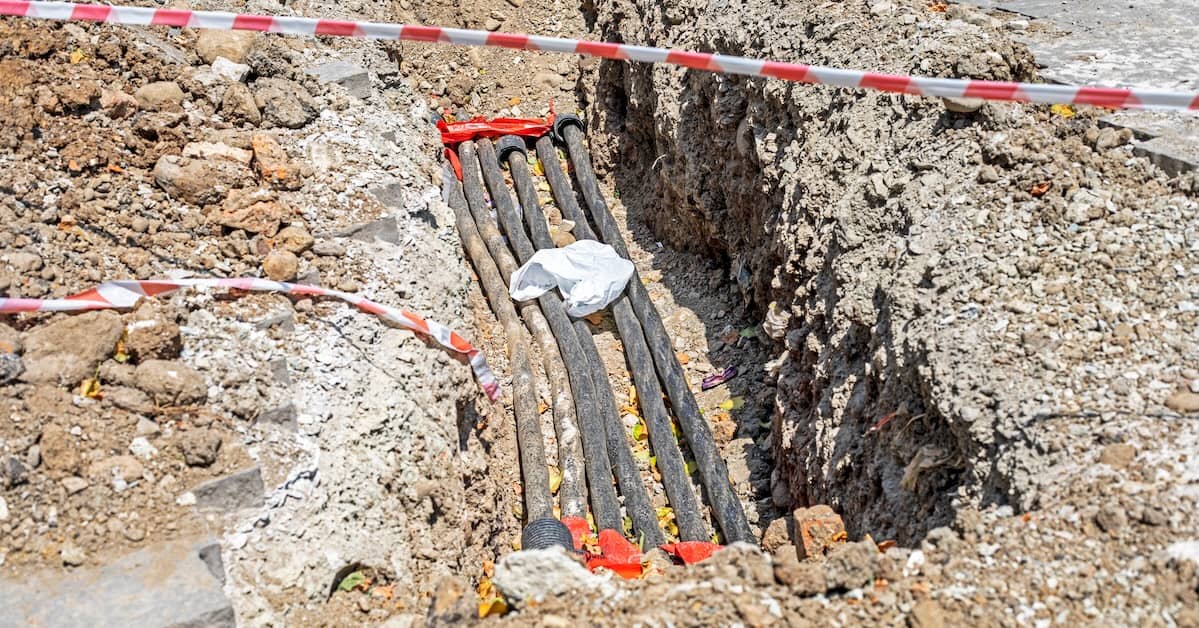
To safely excavate around underground gas lines, you need to know exactly where the lines are buried and use digging methods that won’t damage them. Hitting a gas line can cause a dangerous leak, fire, or explosion. Even a small scrape or dent can weaken a pipe and create problems down the road.
Hydrovac excavation offers a safer way to get the job done. Instead of using a metal bucket or sharp digging tools, it uses pressurized water and a powerful vacuum to carefully remove soil around buried utilities.
Why Is Digging Around Underground Gas Lines Dangerous?
Underground gas lines can be found beneath streets, sidewalks, parking lots, and construction sites. Some carry natural gas to individual buildings, while others are part of larger distribution or transmission systems.
The problem is that you can’t always tell exactly where a gas line runs just by looking at the ground. Utility maps may be outdated, and buried pipes aren’t always where you’d expect them to be. Using a backhoe or excavator near these lines can be risky. A single strike could damage a pipe and release natural gas.
Potential hazards include:
- Gas leaks: A damaged pipe can release natural gas into the surrounding area.
- Fires and explosions: Escaping gas can ignite if it comes into contact with a spark or another ignition source.
- Service interruptions: Damaged lines may leave homes and businesses without gas service.
- Injuries: Workers and people nearby could be seriously hurt.
- Expensive repairs: Utility damage can delay construction and lead to costly emergency repairs.
The safest approach is to locate buried gas lines before digging and use an excavation method that reduces the chance of damaging them.
What Should You Do Before Excavating Near a Gas Line?
Before any digging begins, there are a few important steps contractors need to take.
1. Contact 811 Before You Dig
The first step is to contact 811, the national call-before-you-dig service. This alerts utility companies to your planned excavation so they can arrange to mark their underground facilities.
The markings give workers a general idea of where buried utilities are located. However, they don’t necessarily show the exact depth or position of every pipe. Private gas lines may not be covered by the 811 locating service, so additional locating work may be necessary.
2. Review the Site Conditions
Every excavation site is different. Soil conditions, nearby utilities, available workspace, and the type of gas line can all affect how the work should be done. Before digging, contractors should look for potential problems, including:
- Multiple utilities buried close together
- Limited access for excavation equipment
- Rocky, compacted, or unstable soil
- Existing structures near the excavation area
- Utility markings that don’t match site plans
Identifying these issues early helps contractors choose the right equipment and avoid unnecessary risks.
3. Expose the Gas Line Carefully
Utility markings are only the starting point. Before heavy equipment works near a buried gas line, contractors need to verify its actual location. This is where hydrovac excavation can make a big difference.
How Does Hydrovac Help Safely Excavate Around Underground Gas Lines?
Hydrovac excavation combines pressurized water with a powerful vacuum system to remove soil. The water loosens the ground, and the vacuum pulls the resulting slurry into a debris tank.
Unlike a backhoe, which relies on a metal bucket to scoop out large amounts of dirt, hydrovac equipment allows operators to remove soil in a more controlled manner. This makes it especially useful when working near sensitive underground utilities.
Hydrovac offers several important advantages, such as:
- Greater precision: Operators can remove soil from specific areas without disturbing as much of the surrounding ground.
- Less mechanical contact: Water excavation reduces the need for sharp metal tools near buried pipes.
- Better visibility: As soil is removed, workers can see the location and condition of exposed gas lines.
- Smaller excavations: Hydrovac equipment can create narrow holes without opening up a large section of the worksite.
- Less disruption: Smaller excavations can mean less damage to nearby pavement, landscaping, and other infrastructure.
Water pressure, nozzle selection, and operating techniques must be appropriate for the utility being exposed. The experienced crews at Superior Hydrovac are committed to safely getting the job done right the first time.
What Is Potholing, and Why Is It Important?
One of the most common ways contractors use hydrovac to safely excavate around underground gas lines is through a process called potholing. Potholing involves digging a small, targeted hole to expose a buried utility. Instead of excavating a long trench to find a gas line, workers open a small area where the line is expected to be.
Once the pipe is visible, they can confirm its location, depth, and direction. This information is especially valuable when:
- Installing new water, sewer, or electrical lines
- Crossing existing gas lines with new utilities
- Preparing foundations or other underground structures
- Planning directional drilling projects
- Repairing or replacing nearby infrastructure
Can Hydrovac Be Used to Dig Trenches Near Gas Lines?
Yes. Hydrovac can also be used for trenching when excavation needs to take place near existing gas infrastructure. Traditional trenching equipment works well in open areas, but it may not provide enough control when several utilities are buried close together. Hydrovac allows operators to remove soil in smaller sections while keeping better track of what’s underground.
This can be particularly helpful in busy commercial areas, industrial facilities, and utility corridors where gas lines share limited space with water pipes, electrical cables, and communication lines.
In some projects, contractors use hydrovac to expose sensitive utilities first, then switch to conventional excavation equipment once they reach an area where mechanical digging is permitted.
What Happens If an Underground Gas Line Is Damaged?
Even with careful planning, utility damage can happen. If a gas line is struck, scraped, or otherwise damaged, work should stop immediately. Workers should move away from the area, keep others clear, and contact emergency services and the gas utility as appropriate. They should never attempt to repair a damaged gas line themselves.
A pipe that appears to have only minor surface damage still needs to be evaluated by the utility owner. Small dents and scratches can weaken the pipe and cause problems later. Preventing these situations is one of the biggest reasons to use hydrovac when working around gas infrastructure.
Get Started with Superior Hydrovac Today!
Digging near underground gas lines isn’t something you want to leave to chance. One wrong move can put workers at risk, damage critical infrastructure, and bring your project to a halt.
At Superior Hydrovac, we understand how important it is to protect underground utilities while keeping your project moving. Our experienced team uses specialized hydrovac equipment to carefully expose buried lines, perform potholing, and handle excavation work in areas where precision matters.
Contact Superior Hydrovac today online or at (844) 271-5944 to get started! We proudly serve customers in Del Valle, Austin, Iowa Park, Fort Worth, San Antonio, and Spring, Texas. We also serve areas of Tennessee, Missouri, and Charlotte, North Carolina.
More Articles For You
Contact Peak Today
Contact Superior Hydrovac today online or at 844-271-5944 to discuss your unique project needs. We are ready to deliver exceptional service whenever you need us. We look forward to surpassing your expectations.
Call Now!
